Every call is a priority. Scout runs the intake, guides the homeowner through a photo walkthrough, and delivers a Flash Report to your inbox — in whatever language they speak — so your tech arrives ready and your adjuster gets a clean claim.
No signup, no card. Five minutes, and the Flash Report is yours to keep.
You're losing them in the stretch between "water is flooding my kitchen" and "a tech is at the door." However long that takes you, it's a black hole. Calls go to voicemail. Details get lost. Techs roll trucks blind. Adjusters push back on incomplete claims.
The phone rings while your CSR is on another line, out to lunch, or asleep. It rolls to voicemail. The homeowner doesn't leave one — she calls the next company on the list.
Critical details slip through. Your CSR captures the address but forgets the insurance carrier, the source of loss, or the safety hazards. The tech arrives unprepared.
Your tech arrives guessing. No photos, no damage scope, no context. The first thirty minutes on site go to work that should have happened over the phone.
Everything that goes wrong between the moment a homeowner realizes they need help and the moment your tech knocks on the door with a plan. It doesn't matter whether that gap is twenty minutes or four hours — it's the same fog. Every missed detail. Every slow callback. Every tech who shows up blind. That fog costs restoration companies more jobs than competition ever will.
Scout doesn't replace your team. It makes sure your team never shows up blind, never misses a callback, and never loses a job to the fog again — no matter which direction the lead came from.
She picks up, calms the homeowner down, and texts them Scout's link while they're still on the phone. She doesn't have to work through twenty-two questions or talk someone into photographing their own basement — Scout handles that. She moves to the next call, and the finished report is in the inbox before she's off the second one.
However the lead reaches you, it ends at the same place — one Scout link, sent by text, printed as a QR code, or handed over by a referral partner. Fires automatically from GoHighLevel, CallRail, ServiceTitan and most modern phone systems.
A 22-step conversation in the homeowner's own language. Captures contact info, loss details, insurance, safety concerns and access notes — then guides them through a photo walkthrough of the damage.
Structured intake data, inline photos, full transcript. Your CSR dispatches with confidence. Your tech arrives ready. Your adjuster gets a clean claim.
Everything you need to dispatch a tech, brief an adjuster, and start the job — in one structured email, generated while you sleep.
Active water loss, category 2, homeowner on site.
Tech notes Source controlled. Saturation extends roughly 6 ft from the water heater closet into the hallway. Drywall shows wicking at the 12-inch line. Carpet pad fully saturated. Claim not yet filed. Technician to call back within the hour.
The report doesn't stop being useful when the truck pulls up. It changes who's running the conversation the moment the door opens.
Without the report, your PM is a listener for the first ten minutes — waiting to be handed the job by someone who's panicking and doesn't know what matters. With it, he opens: "Water heater let go around one-thirty, you got the valve off. I want to check the drywall line, then I'll walk you through what happens next."
Right now she tells the story to your CSR, then your tech, then your PM, then the adjuster. Every retelling is another chance to feel like nobody's listening. Scout captured it once, and everyone who shows up already knows.
"We need to pull the carpet pad and cut twelve inches of drywall" sounds like expertise when your PM has led from the first sentence. It sounds like an upsell when the homeowner has been driving the conversation.
She's made decisions she isn't qualified to make — turn it off, move the furniture, call insurance or call you first. What she wants isn't information. She wants to stop being responsible for a situation she doesn't understand. Someone walking in and saying "I've got it from here" is the moment she gets to put it down. That's why she doesn't call a second company.
Both are actual Scout outputs — the same format your team gets on every loss. No marketing mockups, no fake fields.
A homeowner finds mold behind a family photo wall. Scout captures her contact details, the suspected source, her State Farm information, access notes for the tech — including the dog — and three documentation photos.
Open PDF ↗A plumber replaces a failed supply line, sees saturation running 8 ft into the hallway, and files a referral through Scout. Moisture line at 14 inches, insulation saturated, 60–72 hours of exposure — the kind of pre-qualified lead every owner wants in their inbox.
Open PDF ↗On a normal week your office handles the calls fine. Then hail comes through and forty homeowners dial you the same afternoon. The jobs are there. The question is how many you can actually capture before someone else does.
Scout runs every intake at once. The fortieth caller gets the same twenty-two questions and the same photo walkthrough as the first — no hold music, no voicemail, no "we'll get back to you Monday."
By morning you have forty Flash Reports with photos and scope. You can see which losses are actively running, which are contained, and which can wait until Thursday — so your trucks go to the right addresses in the right order.
Chasing a storm two states away? Scout takes intake in that market the day you decide to go, before you've hired anyone or forwarded a phone line. Your crew arrives to a queue of documented losses instead of a phone book.
I know what a surge week looks like from inside the office — the calls you never got to, the ones you got to too late, and the ones you took but couldn't document well enough to bill cleanly. Scout is the thing I wanted in my hand that February.
Every lead gets a response in under sixty seconds — Tuesday at ten, Saturday at midnight, same intake either way. Techs arrive already briefed, with photos in hand and a plan. Adjusters trust your documentation. Claims move faster and payouts come quicker. Your close rate climbs, your CSR overtime drops, and you finally sleep through the night.
Leads go to whichever competitor picked up first. Techs roll trucks without photos and waste the first hour on every job. Adjusters push back on incomplete claims and payouts get delayed. Your CSR burns out. Your team burns out. You burn out. Great jobs slip through the cracks every single weekend.
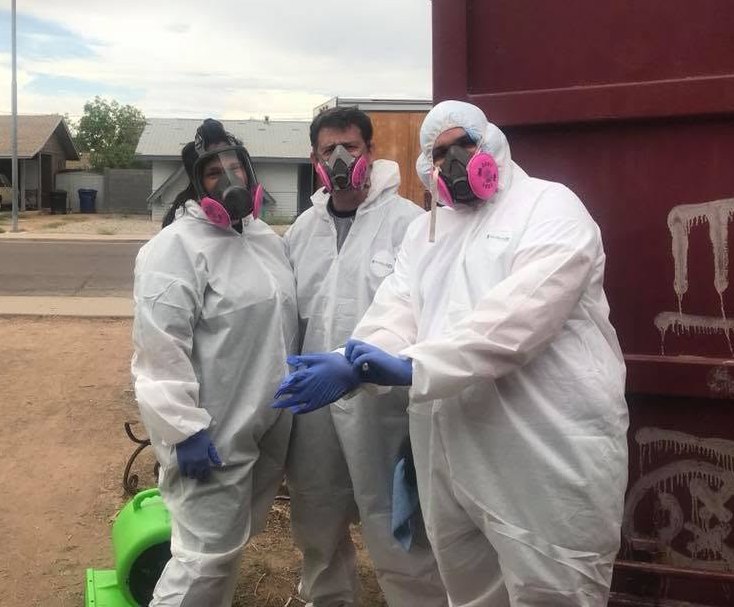
I spent a decade in the restoration industry — from SERVPRO franchises to storm response work, including the 2021 Texas freeze. But before any of that, I lived through fourteen years of Tampa hurricane seasons as a homeowner. I've been the family watching water come in, and I've been the team showing up to stop it.
When a homeowner calls after a loss — two in the morning or two in the afternoon — they need someone who understands what they're actually going through, not a call center reading a script. And the company answering needs every detail captured right the first time, so their tech arrives ready.
I built RestoreScout because nobody else was building the tool I wished I'd had — on either side of that door.

Start with one location, add more as you grow. Every plan includes the full Scout intake flow, Flash Reports, and the 22-step conversation in your homeowner's language.
Why a setup fee? Because Scout gets built for your operation rather than bolted on. Setup covers custom intake configuration, your branding, CRM integration and team training. We do that work so you don't have to.
Call centers cost $800 to $2,500 a month and still send your CSR a voicemail with incomplete information. Scout captures 22 structured data points every time, guides the photo capture, and delivers a Flash Report your tech can actually use — in under ten minutes, at a fraction of the cost. Scout also never has a bad night, never mishears, and never forgets to ask about the insurance carrier.
Scout detects and responds in whatever language your homeowner speaks — no setup, no per-customer configuration, no separate phone tree. It's confirmed working in English, Spanish and French, and the underlying technology handles dozens of languages without translation. Scout doesn't switch into a "Spanish mode"; it thinks and responds in the homeowner's language.
For markets with a heavy concentration of one language — Vietnamese in California, Polish in Chicago, Haitian Creole in South Florida — we can set Scout to default to it for your service area, so detection isn't even needed. Tell us your market during onboarding.
Every Scout intake produces a timestamped transcript, structured data and geotagged photo evidence. That's exactly what adjusters want to see — and Scout was designed in consultation with a working insurance adjuster to make sure the output reduces claim friction rather than adding to it.
The core 22-step flow is tested for water, fire, mold and storm losses. On Professional and Multi-Location you can add custom fields, priority questions, or branch-specific branding. Scout adapts to your operation rather than the other way around.
Flash Reports can be emailed to any address you specify, which means they drop into anything that accepts inbound email — Jobber, ServiceTitan, GoHighLevel, Zoho, or a shared inbox. Professional and Multi-Location include direct webhook integration for tighter CRM flows.
Each plan includes a monthly allowance sized well above normal volume, so a busy week won't put you over. If you do exceed it, additional reports are $9 each. On the annual plan the allowance is pooled across the whole year, so a heavy storm month is balanced by a quiet one.
Takes about five minutes. Walk through it the way a homeowner would — Scout will ask you the questions, guide the photos, and email you the Flash Report it produces. Yours to keep, whether or not you ever talk to us.
Use a real email address — that's where the Flash Report lands.
